
CEGR 492 · Proposal Development
Significance of Study Builder
Explain why the project matters beyond course completion.
Significance and Expected Outcomes
0 of 2 lecture sections read
Engineering story
Two proposals request the same faculty time. One says the work 'will contribute to knowledge in the field.' The other says the work 'will give the county a load rating and retrofit design for the only hospital access crossing, replacing an assumed posting with a computed capacity and deferring a $2.1M replacement by an estimated eight to twelve years.' Only one of these is a reason to fund work.
- What is the engineering problem?
- Significance written as generic benefit cannot be evaluated, compared or verified.
- What information is missing?
- Who benefits, by how much, measured how, and when.
- What should the engineer evaluate?
- Whether each claimed benefit is attributable to your deliverable and measurable.
- What decision must be made?
- State significance in beneficiary, magnitude and evidence terms.
- How does this lesson help?
- This lecture provides the beneficiary-magnitude-evidence pattern and the difference between outcomes and outputs.

Photo 1. Significance is measured in protected people and property, not in pages of analysis.
Capstone Studio instructional photograph
Why this matters
- Funding and prioritization decisions are made on significance, not on technical elegance.
- Community impact: naming beneficiaries keeps engineering accountable to the people served.
- Assessment: expected outcomes define what the final report must demonstrate.
- Professional practice: a proposal that cannot state its value will not be selected.
Learning objectives
- Distinguish outputs (artifacts) from outcomes (changes in condition or decision capability).
- Formulate significance statements with beneficiary, magnitude and evidence.
- Evaluate claimed benefits for attributability to your work.
- Identify expected outcomes that the final report must demonstrate.
ABET evidence: SO 2 · SO 3 · SO 4 · CE-PC9
Prerequisite review
1. Outputs versus outcomes
An output is what you produce: a calculation package, a model, a drawing set, a recommendation. An outcome is what changes because the output exists: a posting removed, a decision made with computed rather than assumed capacity, a design basis established for a future project, a hazard quantified for prioritization.
Capstone significance should claim outcomes and list outputs. Claiming outcomes you cannot cause — 'this project will reduce regional flooding' — is overclaiming; claiming only outputs — 'this project will produce calculations' — undersells the work.
Photo 2. Output: a designed levee section. Outcome: a floodplain that no longer inundates in the 100-year event.
Capstone Studio instructional photograph
2. Beneficiary, magnitude, evidence
Write each significance claim in three parts. Beneficiary: who specifically gains — the county, 38 property owners, 1,900 student pedestrians, the operating agency. Magnitude: how much, in units — delay reduced from 96 to 48 s/veh, deferred capital cost, exposure reduced from 38 to 4 properties. Evidence: what in your report will substantiate the claim — the routing model, the load rating, the alternatives matrix.
The evidence element is what separates significance from marketing. If nothing in your report will substantiate a claim, delete the claim.
Avoid this trap. Avoid 'will contribute to the body of knowledge' unless you can name the specific finding and where it will be reported.
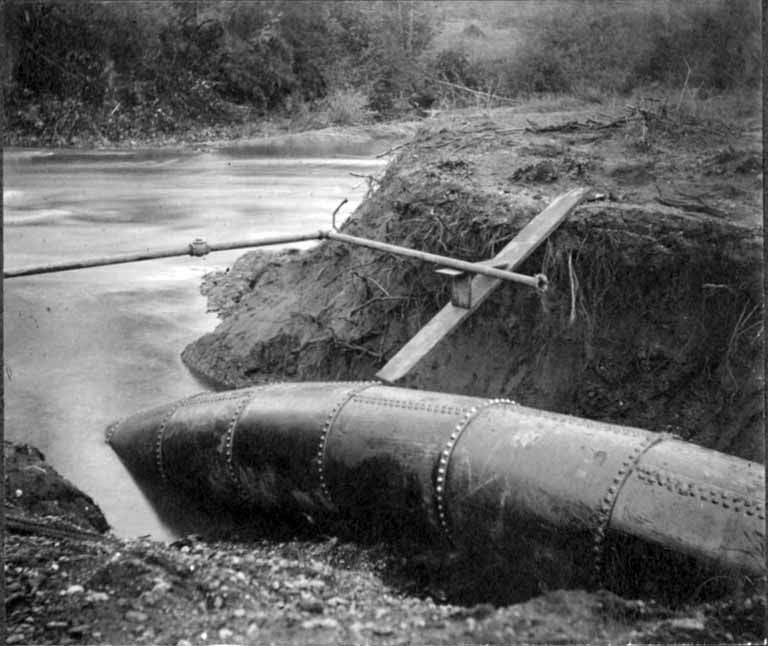
Photo 3. Beneficiaries counted at the service connections the replaced main actually feeds.
Wikimedia Commons, public domain
Table 1. Weak and strong significance claims.
| Weak | Strong | Evidence in report |
|---|---|---|
| Improves safety | Restores 495 ft stopping sight distance at the curve, above the 425 ft required for the 45 mph design speed | Sight distance analysis and profile |
| Saves money | Defers an estimated $2.1M replacement by 8-12 years | Life-cycle cost analysis with service-life assumptions |
| Helps the community | Removes flood exposure for 34 of 38 properties in the 10-year storm | Hydraulic model results, before and after |
| Advances knowledge | Provides the first local calibration of curve numbers for combined-sewer catchments under 1 mi² | Calibration results and validation statistics |
Professional workflow
- List outputs from your objectives.
- For each output, name what decision or condition it changes.
- Assign a beneficiary and a magnitude with units to each outcome.
- Identify the report element that will evidence each claim.
- Delete any claim without evidence or attributability.
Applicable standards
Agency benefit-cost or prioritization guidance
Provides accepted units for benefit claims.
ASCE Code of Ethics
Requires truthful and objective statements about the value of work.
Case study — The claim that could not be defended
A proposal claimed a 30 percent crash reduction from a geometric change without a safety analysis.
- No crash modification factor was cited and no before-after data existed.
- The claim was removed and replaced with a sight-distance restoration claim that the analysis supported.
Lesson learned. Claim only what your own report will evidence.
Source: Departmental review records.
Why this section exists
Significance answers the reviewer's question: if this succeeds, what is different in the world?
Learning objectives
- Write significance by category
- Build a stakeholder benefit matrix
- State five contributions
Significance of Study
Weak
This study will be very useful for engineers and the community.
Strong
The rating results give the owner the technical basis to remove or retain the 8-ton posting, avoiding an estimated $310,000 in annual detour costs for the 240 trucks currently rerouted, and providing a repeatable procedure for the twelve similar structures in the county inventory.
It quantifies the benefit and names the decision the work supports.
Standards and codes
Tie benefits to measurable outcomes — cost avoided, delay reduced, risk lowered, service life extended.
Common mistakes
- Generic claims about helping society.
- No quantified benefit.
- Repeating the problem statement.
Research tips
- Cover technical, economic, social, environmental, and professional/ABET significance.
- Quantify at least one benefit.
- Name the specific decision your work informs.
A team's significance section restated its objectives in different words. Reviewers asked, 'So who is better off?'
- What went wrong?
- No stakeholder, no measurable benefit, no decision improved.
- What information was missing?
- Which stakeholder decision changes and how the improvement would be measured.
- What should the team do next?
- Complete the stakeholder benefit matrix with a measure of success per stakeholder.
- Which section addresses it?
- Stakeholder Benefit Matrix
Walkthrough video
Mini quiz
Interactive checklist
0/3FE Civil connection — Ethics, Sustainability, and Public Welfare
Significance is where the paramountcy of public safety becomes concrete.
Reference Handbook: FE Reference Handbook — Ethics and Professional Practice (section placeholder)
- Which stakeholder interest takes precedence under the NSPE code? (placeholder)
- How is sustainability weighed against first cost? (placeholder)
- What documentation supports a public-benefit claim? (placeholder)
Recommended resources
- ASCE Code of Ethics — Public welfare framing.