
CEGR 492 · Proposal Development
Objectives Builder
Define exactly what the project will accomplish, in measurable engineering terms.
Objectives: converting the problem into executable work
0 of 4 lecture sections read
Engineering story
A proposal lists: 'Objective 1 — study the bridge. Objective 2 — understand the loads. Objective 3 — make recommendations.' In week ten the team cannot tell whether they are finished, because none of the objectives can be completed, only abandoned.
- What is the engineering problem?
- Objectives written with unmeasurable verbs produce work with no completion condition.
- What information is missing?
- For each objective: the method, the output artifact and the acceptance criterion.
- What should the engineer evaluate?
- Whether each objective names a verifiable deliverable produced by a stated method.
- What decision must be made?
- Rewrite each objective as an executable engineering task before methodology begins.
- How does this lesson help?
- This lecture provides the verb hierarchy, the objective formula and the traceability structure that makes progress measurable.

Photo 1. Objectives are what the team will deliver — an erection-ready designed member, not a general intention to 'study steel'.
Capstone Studio instructional photograph
Why this matters
- Schedule control: objectives are the units of a work breakdown structure and the basis of your Gantt chart.
- Assessment: rubrics score deliverables; an objective without a deliverable cannot be scored.
- Professional practice: scopes of work in industry read exactly like well-written objectives.
- Team coordination: each objective can be assigned, tracked and reviewed independently.
Learning objectives
- Formulate a primary objective aligned to the problem statement's criterion.
- Decompose the primary objective into three to five specific objectives.
- Select measurable verbs appropriate to the cognitive and engineering level required.
- Attach a method, output artifact and acceptance criterion to each objective.
- Verify traceability from problem statement to objectives to deliverables.
ABET evidence: SO 1 · SO 2 · SO 5 — function effectively on a team · SO 6 — develop and conduct experimentation · CE-PC3
Prerequisite review
Problem statement
Objectives inherit the criterion from the statement; if the criterion changed, the objectives change.
Open refresherMethodology awareness
Each objective must be executable with a method you can describe in Chapter 3.
Open refresher1. The objective formula
Write every objective as: [Measurable verb] [engineering object] [using method] [to criterion or output]. For example: 'Compute the sliding, overturning and bearing factors of safety for the existing wall using AASHTO LRFD service and strength load combinations to determine compliance with the 1.5 minimum.' Every part of that sentence does work — the verb sets the activity, the object sets the scope, the method sets the tool, the criterion sets completion.
Contrast with 'understand wall stability': no artifact, no method, no completion. Understanding is a precondition of engineering, not a deliverable.
Objective = Verb + Object + Method + Criterion/Output
Avoid this trap. Ban these verbs from objectives: understand, learn, study, explore, look at, investigate (unless paired with a defined protocol and output).
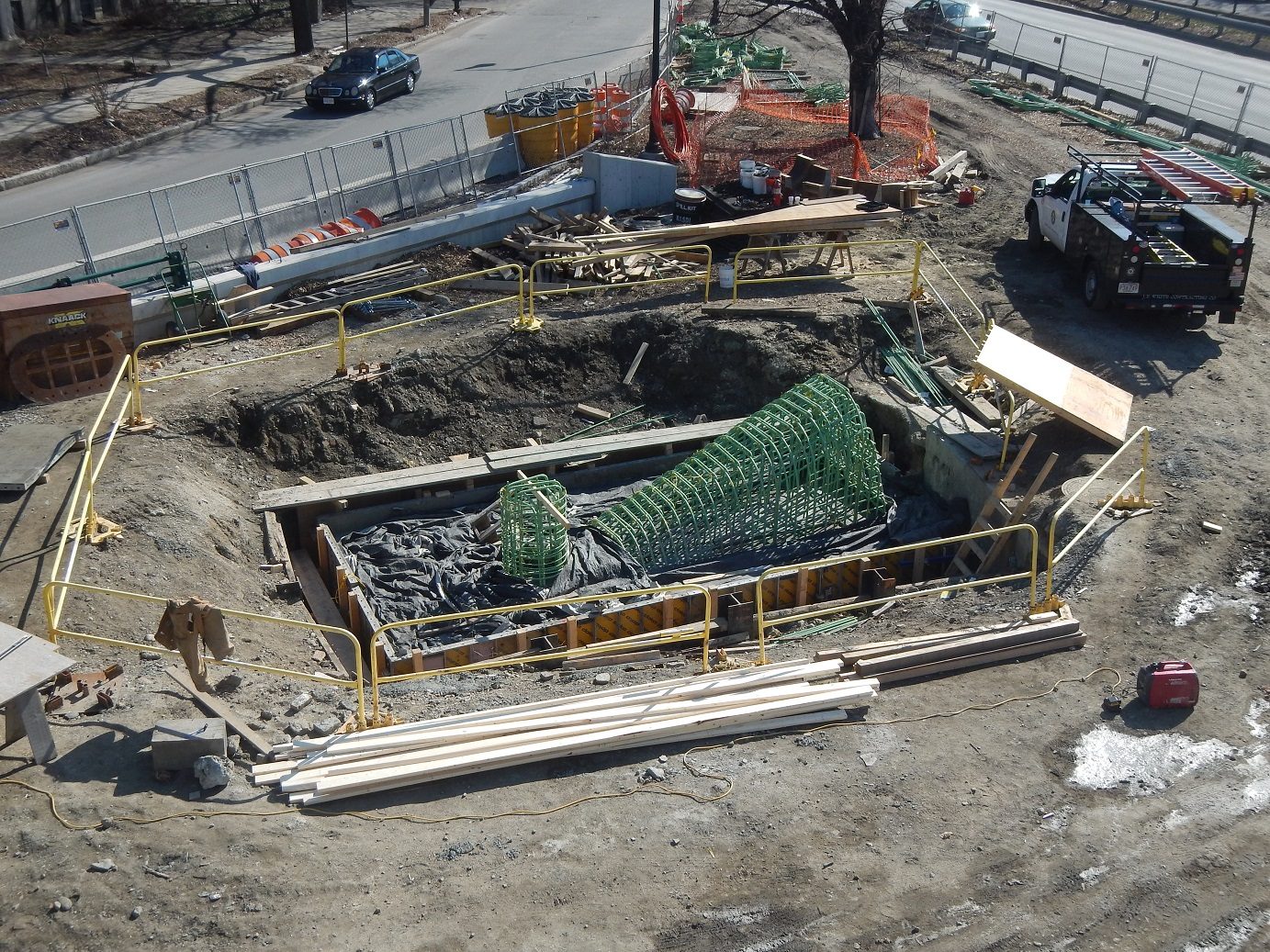
Photo 2. An objective ends in something buildable and checkable — reinforcement that satisfies flexure, shear and detailing.
Wikimedia Commons, public domain
2. Primary and specific objectives
The primary objective states the overall engineering outcome — typically a design, evaluation, model or recommendation tied to the criterion in your problem statement. Specific objectives are the three to five steps that must each be completed for the primary objective to be achievable, and they should follow the actual work sequence: characterize, analyze, design, verify, evaluate.
Three to five is not arbitrary. Fewer than three usually means a step is hidden inside another and will be underestimated. More than five in a twelve-week capstone usually means the scope exceeds the schedule, or that tasks have been listed as objectives.
- Characterize — establish inputs from data.
- Analyze — compute existing performance against the criterion.
- Design — develop and proportion alternatives.
- Verify — check results independently.
- Evaluate — compare alternatives and recommend.
3. Verb selection and cognitive level
Verbs communicate rigor. Identify and describe sit at the lowest level and rarely justify a capstone objective on their own. Calculate, analyze and model sit in the middle and form the analytical core. Design, verify, validate, evaluate and recommend sit at the top and are where capstone-level engineering judgment appears.
A capstone whose objectives never rise above calculation is an exercise, not a design experience. At least one objective must require judgment among alternatives under constraints — that is the ABET design outcome in a single sentence.
4. Traceability and deliverables
For each objective record the method, the output artifact and the acceptance criterion. The artifact is what gets uploaded: a calculation package, a model file with validation, a drawing set, a comparison matrix, a specification. The acceptance criterion is what makes the artifact complete: independently checked, unit-verified, code-compliant, reviewed by the advisor.
This table becomes your submission plan in CEGR 493 and the basis for the dual faculty and administrator scoring rubric.
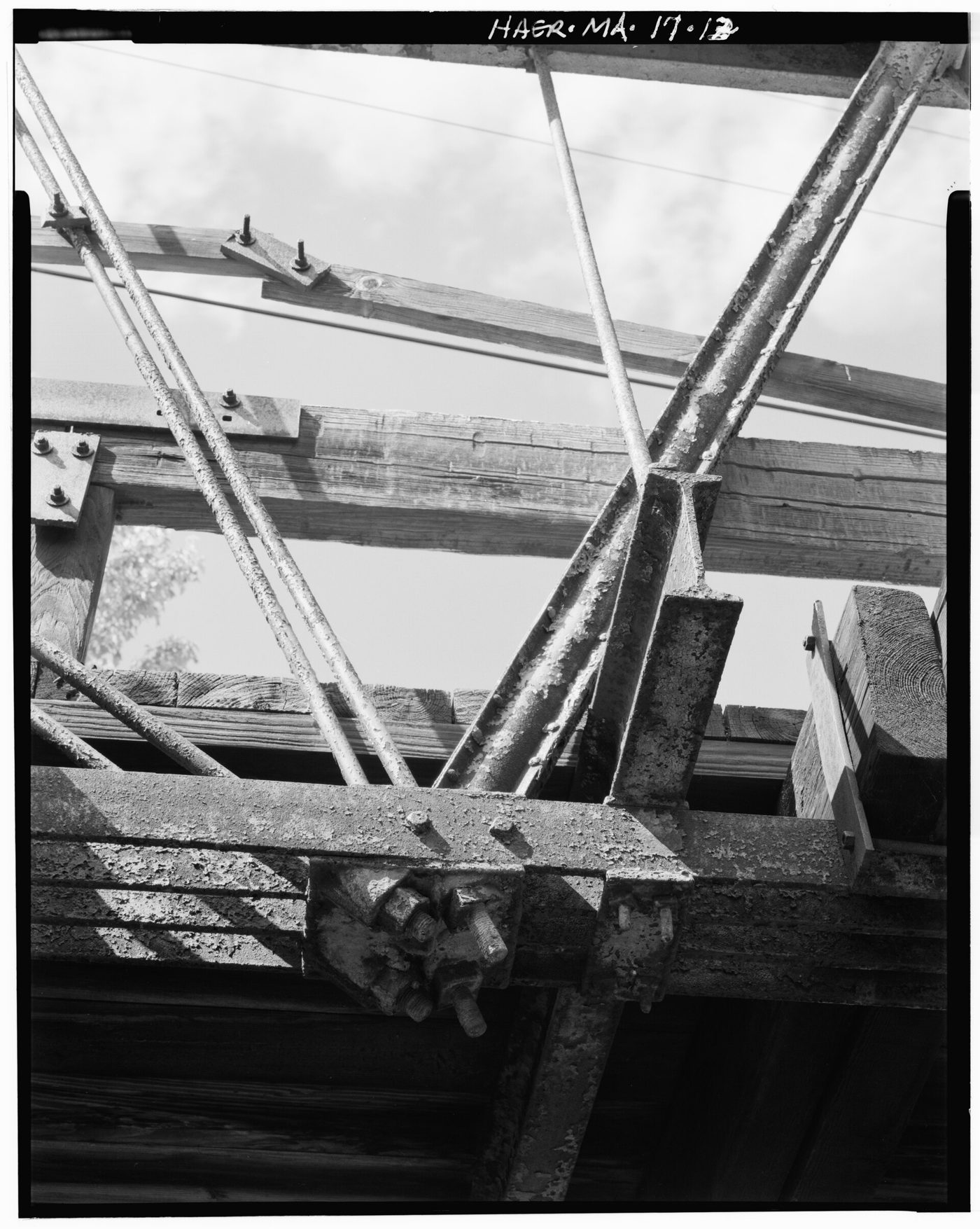
Photo 5. Each objective must terminate in a deliverable a reviewer can open: a connection design with its calculation package.
HAER / Library of Congress, public domain
Table 1. Objective, method, artifact and acceptance criterion.
| Objective | Method | Output artifact | Acceptance criterion |
|---|---|---|---|
| Characterize subsurface conditions | Review 2019 borings; classify per ASTM D2487 | Soil profile and design parameter table | Parameters bracketed by two independent sources |
| Analyze existing wall stability | AASHTO LRFD service and strength combinations | Calculation package with load cases | Hand check within 5 percent of spreadsheet |
| Design drainage restoration and stem retrofit | Agency drainage standard; ACI 318 for added section | Drawings and details | All checks satisfy governing limits |
| Verify computed capacities | Independent recalculation and unit check | Verification memo | All discrepancies resolved and documented |
| Evaluate alternatives and recommend | Weighted criteria matrix with cost | Alternatives comparison and recommendation | Criteria weights justified and sensitivity tested |
Professional workflow
- Restate the criterion from your problem statement.
- Write the primary objective in the required formula.
- Decompose into three to five specific objectives following the work sequence.
- Attach method, artifact and acceptance criterion to each.
- Check verb level: at least one objective must require design judgment.
- Build the trace matrix and confirm no orphan objectives or unaddressed statement elements.
Applicable standards
ABET Criterion 3 Student Outcomes
Objectives supply the evidence mapped to SO 1, SO 2 and SO 6.
Governing design standard for your discipline
Supplies the acceptance criteria embedded in each objective.
Case study — Six objectives, four completed
A team wrote six objectives including two secondary studies unrelated to the criterion.
- Two objectives consumed three weeks and produced results the recommendation did not use.
- The final report reclassified them as future work.
Lesson learned. Objectives that do not serve the primary deliverable belong in Chapter 5, not in Chapter 1.
Source: Departmental capstone records.
Why this section exists
Objectives are the contract between you and your advisor: each one produces a verifiable output.
Learning objectives
- Write one primary objective
- Write 3–6 specific objectives
- Verify each objective against nine quality rules
Aim and Objectives
Weak
Understand how the bridge behaves and learn about load rating.
Strong
Objective 2: Quantify the inventory and operating rating factors of the two exterior girders under HL-93 loading using AASHTO MBE load-and-resistance-factor rating, producing a rating summary table for the owner.
It is measurable, method-bound, and produces a deliverable.
Standards and codes
Each objective should reference the analysis method or standard that will be applied (e.g., load rating per AASHTO MBE).
Common mistakes
- 'Understand' or 'learn' as objectives.
- Objectives with no output.
- More objectives than a semester allows.
Research tips
- One aim, three to six objectives.
- Begin each objective with a measurable verb: quantify, evaluate, model, design, compare, validate.
- Pair every objective with an output and a method.
An objective read 'to understand slope behavior.' At the defense, no one could say whether it had been achieved.
- What went wrong?
- A non-measurable verb with no output and no criterion.
- What information was missing?
- The analysis method, the output, and the acceptance criterion.
- What should the team do next?
- Rewrite as 'To analyze slope stability under drained and undrained conditions using limit equilibrium and determine whether FS ≥ 1.5.'
- Which section addresses it?
- Objective Quality Checker
Walkthrough video
Mini quiz
Interactive checklist
0/4FE Civil connection — Engineering Design and Analysis
Objectives express design intent in the same measurable terms as code acceptance criteria.
Reference Handbook: FE Reference Handbook — Design Loads and Analysis (section placeholder)
- Identify the acceptance criterion for a bearing capacity check. (placeholder)
- State the LRFD strength requirement in general form. (placeholder)
- Determine the serviceability limit for a floor beam. (placeholder)
Recommended resources
- Bloom's taxonomy for engineering outcomes — Verb selection guidance.