
CEGR 492 · Proposal Development
Scope, Assumptions, Constraints, and Limitations
Define precisely what is and is not included in the project.
Scope, Assumptions, Constraints and Limitations
0 of 3 lecture sections read
Engineering story
At a final defense, a committee member asks why seismic loading was not considered. The team answers that the site is in a low-seismic region — true, but it appears nowhere in the proposal. What should have been a one-line scope exclusion becomes a credibility problem in front of the panel.
- What is the engineering problem?
- Undeclared boundaries look like oversights, even when the engineering judgment behind them was correct.
- What information is missing?
- The explicit statement of what is included, what is excluded, what is assumed and what limits the conclusions.
- What should the engineer evaluate?
- Every boundary decision and its justification.
- What decision must be made?
- Declare boundaries in writing, with reasons, before work begins.
- How does this lesson help?
- This lecture separates the four boundary types that students most often conflate and shows how each is justified.
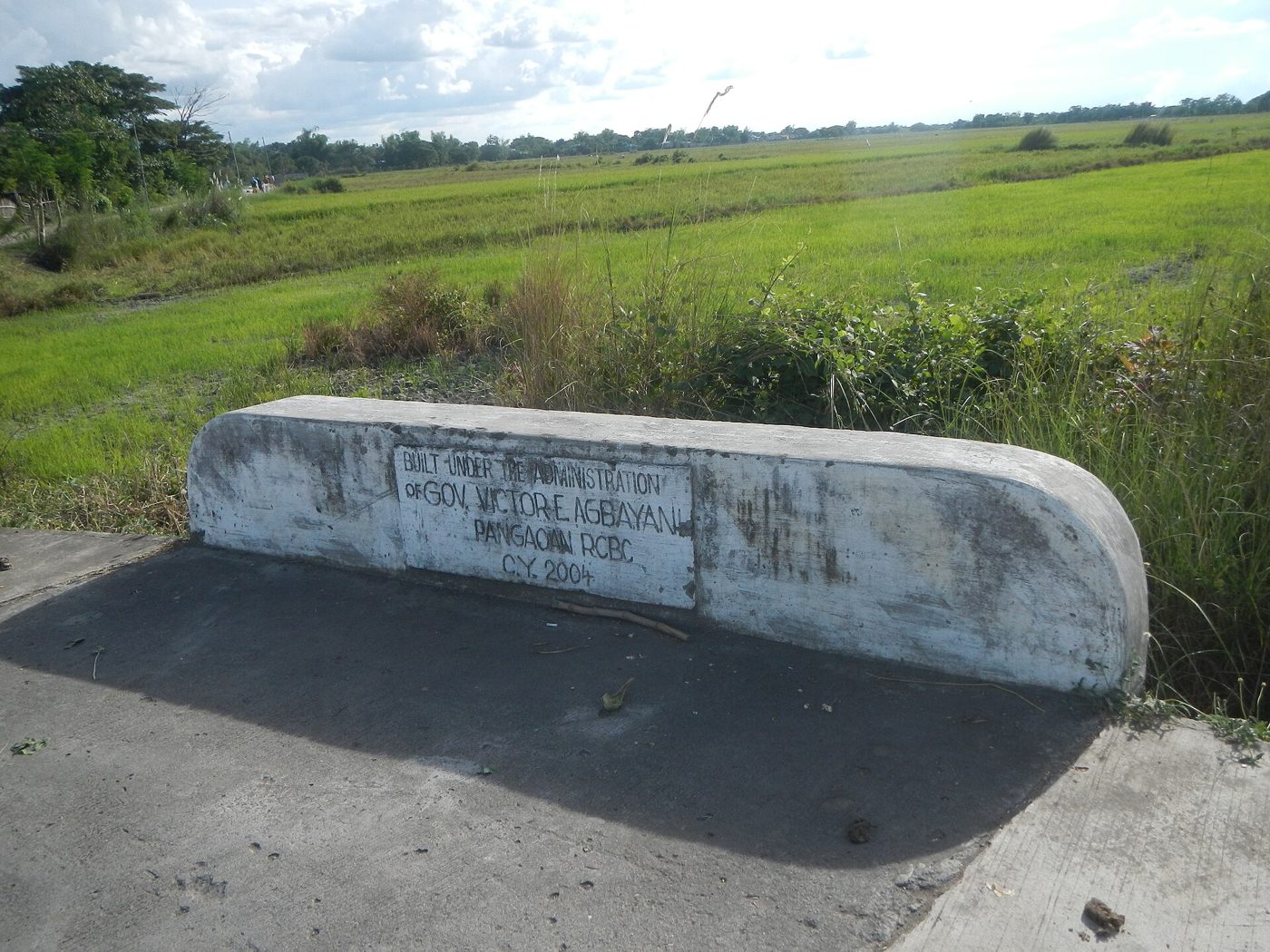
Photo 1. Scope boundaries drawn in the field: this crossing, this drainage area, this design storm — everything upstream is out of scope.
Wikimedia Commons, CC0
Why this matters
- Credibility: declared boundaries demonstrate judgment; undeclared boundaries look like omissions.
- Ethics: limitations disclose where conclusions cannot be relied upon.
- Schedule: scope exclusions protect the primary deliverable.
- Liability awareness: professional reports state their basis and their limits explicitly.
Learning objectives
- Distinguish scope, assumptions, constraints and limitations.
- Justify each boundary with a technical, data or schedule reason.
- Evaluate the effect of each assumption on the conclusions.
- Formulate limitation statements that bound the use of your results.
ABET evidence: SO 2 · SO 4 · CE-PC4 · CE-PC6
Prerequisite review
1. Four boundary types
Scope is what you will and will not do — a choice. Assumptions are values or conditions you accept without direct verification — a substitution for missing evidence. Constraints are external restrictions you cannot change — right-of-way, budget, code, schedule, environmental permit. Limitations are the resulting restrictions on the validity of your conclusions — what your results cannot be used to claim.
Students frequently list a constraint as an assumption ('we assume a 9 ft right-of-way'), which conceals that the restriction is real and binding. They also list limitations as apologies ('we did not have enough time'), when the correct form states the technical consequence: 'conclusions apply to the drained condition; undrained behavior was not evaluated.'
Avoid this trap. If you could change it by deciding differently, it is scope. If someone else controls it, it is a constraint. If you substituted a value, it is an assumption.
Photo 2. Physical boundary drawn at the crossing; temporal boundary at the design storm; technical boundary at hydraulics only.
Wikimedia Commons, CC0
2. Justifying and bounding assumptions
Every assumption needs a source and a bound. 'Assumed friction angle 32°' is weak. 'Assumed effective friction angle of 32°, the lower bound of the range reported for SM soils in the 2019 site report; sensitivity analysis at 30° and 34° changes the sliding factor of safety by −6 and +7 percent' is defensible.
This is also how assumptions are retired. In CEGR 493, each assumption should either be verified with data or carried into the limitations. Keeping a live list of assumptions from proposal through implementation is one of the strongest habits a capstone team can build.
Sensitivity = Δ(output) / Δ(assumed input)
- Report as percentage change for each bounded assumption
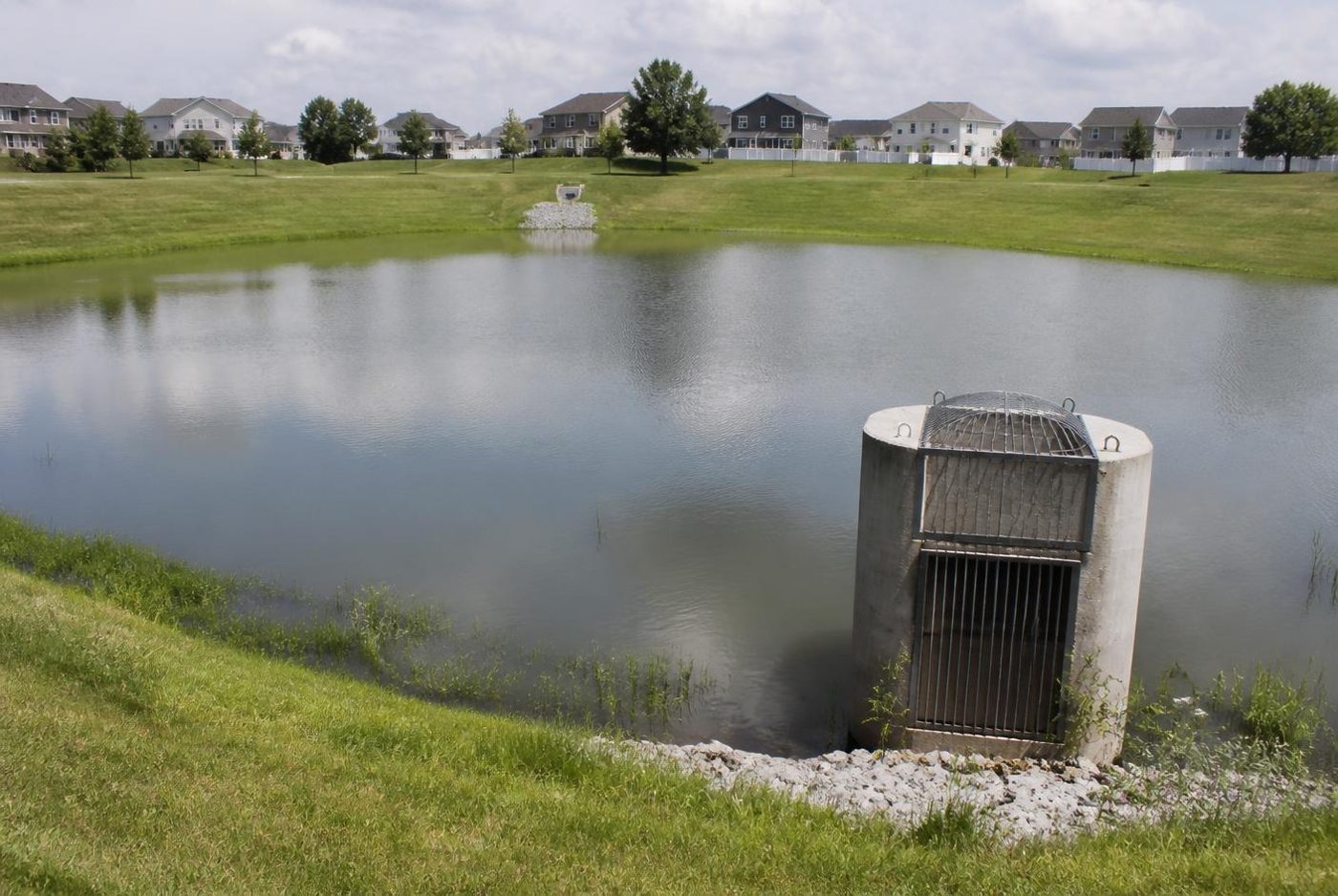
Photo 3. Assumed runoff coefficients must be bounded and tested — the basin either stores the volume or it does not.
Capstone Studio instructional photograph
3. Writing limitations without undermining the work
A limitation states the domain of validity. It does not apologize and it does not invalidate the study. 'Results apply to the as-measured drainage condition; performance under a fully blocked drain was evaluated only as a bounding case' tells a reader exactly how far the conclusion travels.
Reviewers trust reports that bound themselves. A proposal with no limitations section signals either inexperience or overclaiming.
Table 1. Boundary classification with examples and justification form.
| Type | Example | Required justification |
|---|---|---|
| Scope (in) | Sliding, overturning and bearing checks | Traces to an objective |
| Scope (out) | Seismic analysis | Site in low seismic design category per ASCE 7 maps |
| Assumption | Friction angle 32° | Source, bound and sensitivity result |
| Constraint | 9 ft construction envelope | Right-of-way document or owner requirement |
| Limitation | Conclusions apply to drained condition | Technical consequence of the analysis performed |
Professional workflow
- List every analysis you will perform (in scope) and the credible ones you will not (out of scope) with reasons.
- Extract constraints from the stakeholder map and site documents.
- List assumptions with source, bound and planned sensitivity check.
- Run the sensitivity checks and record the percentage effects.
- Write limitations as domain-of-validity statements.
- Re-read objectives: scope and objectives must not contradict.
Applicable standards
ASCE 7 seismic design category maps
Common justification for a documented seismic exclusion.
ASCE Code of Ethics
Requires disclosure of limitations and of the basis for professional statements.
Case study — The unstated exclusion
A drainage study excluded groundwater interaction without saying so.
- Reviewers assumed it had been considered and accepted the design.
- A later investigation found seasonal high groundwater controlled infiltration performance.
Lesson learned. An exclusion that is not written is indistinguishable from an oversight.
Source: Composite of agency review files.
Why this section exists
Scope protects you. A written boundary is the reason nobody expects construction documents in week 12.
Learning objectives
- Set boundaries
- Justify assumptions
- Record constraints and limitations
- State exclusions explicitly
Scope, Assumptions, Constraints and Limitations
Weak
This project will study the bridge as much as possible within the semester.
Strong
Scope is limited to the superstructure of spans 1–2; substructure and foundation assessment are excluded. Concrete strength is assumed at 4,000 psi per the 1968 as-built plans, which governs the flexural capacity calculation to within ±6%.
It states the boundary, the assumption source, and the quantified effect.
Standards and codes
Assumptions must be justified by a code provision, published value, or documented site condition.
Common mistakes
- Confusing constraints with limitations.
- Unjustified assumptions.
- No exclusions listed.
Research tips
- Separate scope (what you will do), assumptions (what you take as true), constraints (external limits), and limitations (how results may be read).
- Every assumption needs a reason, a source, and an effect on the result.
- Name explicit exclusions.
A flood-mitigation team proposed a detention pond without defining the drainage area, design storm, existing discharge, or allowable release rate.
- What went wrong?
- No hydrologic boundary meant no defensible sizing and no acceptance criterion.
- What information was missing?
- Drainage area, design storm, pre/post discharge, and regulated release rate.
- What should the team do next?
- Define the catchment boundary and design storm before sizing any storage.
- Which section addresses it?
- Scope Builder
Walkthrough video
Mini quiz
Interactive checklist
0/4FE Civil connection — Professional Responsibility
Stating limitations honestly is a licensure-level professional obligation.
Reference Handbook: FE Reference Handbook — Ethics and Professional Practice (section placeholder)
- When must an engineer disclose the limitations of an analysis? (placeholder)
- Who is responsible for assumptions embedded in a model? (placeholder)
- What are the obligations when data quality is unknown? (placeholder)
Recommended resources
- Out-of-scope template — Eight standard exclusions provided.