CEGR 492 · Proposal Development
Problem Identification Studio
Identify the actual engineering problem rather than a broad topic or a visible symptom.
Problem Identification: evidence, stakeholders and root cause
0 of 4 lecture sections read
Engineering story
A 42-year-old grade-separated interchange ramp shows longitudinal cracking along the outside shoulder. Maintenance has sealed the cracks twice in three years. A resident group reports ponding after moderate rain. The agency asks a design team whether the pavement needs rehabilitation. The team resurfaces the ramp. Eighteen months later the same crack pattern reappears, now with a 2 in. elevation offset.
- What is the engineering problem?
- The visible distress was treated as the problem. The actual problem was a drainage-driven subgrade weakening beneath the shoulder, which the overlay concealed rather than corrected.
- What information is missing?
- Subgrade moisture and strength data, drainage outlet condition, deflection testing, and construction records for the shoulder underdrain.
- What should the engineer evaluate?
- Whether the distress is a surface condition, a structural deficiency, or a symptom of a subsurface or drainage cause.
- What decision must be made?
- Whether to specify a surface treatment, a structural overlay, or a drainage and subgrade correction.
- How does this lesson help?
- This lecture teaches the separation of symptom, problem and root cause, and the evidence required to defend each.
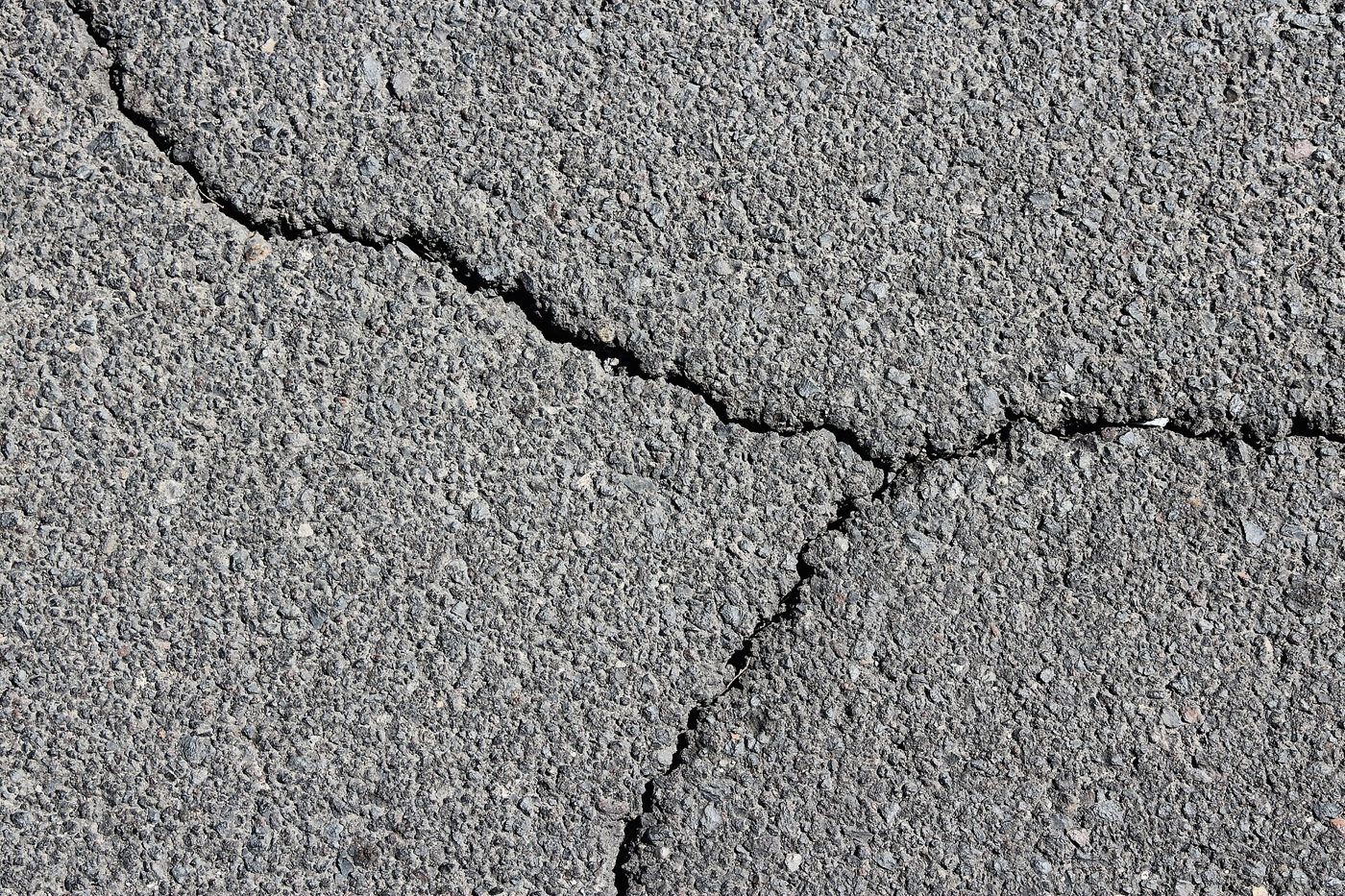
Photo 1. The longitudinal cracking the maintenance crew sealed twice — a symptom whose root cause was drainage, not the surface.
Wikimedia Commons, CC BY 3.0
Why this matters
- Public safety: treating a symptom leaves the hazard in place while creating the appearance of action.
- Cost: rework costs multiples of the correct first intervention, and repeated maintenance consumes budgets that could fund a permanent fix.
- Professional practice: an engineer's value lies in diagnosing causes, not in describing conditions.
- Sustainability: repeated premature reconstruction wastes materials and embodied carbon.
- Ethics: a report that omits a known cause misleads the owner even if every stated fact is true.
Learning objectives
- Distinguish symptoms, problems and root causes using field and documentary evidence.
- Construct a stakeholder map identifying who is affected and who decides.
- Apply a structured root-cause method (five whys or fishbone) to a civil system.
- Evaluate evidence quality and identify the data gaps that must be closed.
- Formulate a problem definition that is measurable, bounded and attributable.
ABET evidence: SO 1 · SO 2 · SO 4 · CE-PC2 · CE-PC5
Prerequisite review
Topic selection
Your topic already names a system and a suspected deficiency; problem identification tests whether that deficiency is the real problem.
Open refresherFailure modes
Recall the primary distress and failure mechanisms in your discipline — fatigue, corrosion, settlement, scour, surcharge, congestion.
Basic statistics
Frequency, trend and outlier reasoning are needed to judge whether a reported condition is systematic or incidental.
Open refresher1. Symptom, problem, cause
A symptom is what an observer notices: a crack, a queue, a flooded intersection, a complaint. A problem is the engineering condition that produces the symptom, expressed against a criterion: the pavement structural number is below that required for the 20-year ESAL projection; the intersection operates at level of service F in the PM peak; the inlet capacity is exceeded in the two-year storm. A root cause is the mechanism that created the problem: an unmaintained underdrain, an unaccounted development, a construction deviation from the design detail.
The distinction is not academic. Interventions selected against a symptom fail predictably, because the mechanism is untouched. Interventions selected against a root cause change the system's behavior. Every capstone problem definition must therefore contain three sentences: what is observed, what condition it violates, and what mechanism produces it — with evidence attached to each.
Avoid this trap. Writing 'the bridge is deteriorated' states a symptom. State the condition rating, the governing criterion and the mechanism (chloride-induced corrosion at the deck joints) instead.
Photo 2. Symptom: the crack pattern. Problem: loss of structural capacity. Cause: saturated subgrade beneath the shoulder.
Wikimedia Commons, CC BY 3.0
2. Evidence hierarchy
Not all evidence carries equal weight. Measured, instrument-based data from a documented procedure ranks highest: deflection testing, survey, gauge records, load tests, laboratory results. Agency records rank next: inspection reports, as-built plans, maintenance histories, traffic counts. Observational evidence — photographs, site notes, interviews — is essential for context but rarely sufficient alone. Anecdote and inference rank lowest and must be labeled as such.
Your proposal must state, for each claim, which tier of evidence supports it and what remains unverified. Reviewers do not penalize acknowledged uncertainty; they penalize unlabeled assumption. A sentence such as 'shoulder underdrain outlets could not be located in the field; their functional condition is unknown and is treated as a variable in the analysis' is stronger than silence.
- Tier 1 — measured data with documented method and date.
- Tier 2 — agency records and as-built documentation.
- Tier 3 — direct observation and photographs.
- Tier 4 — interviews, complaints and inference.
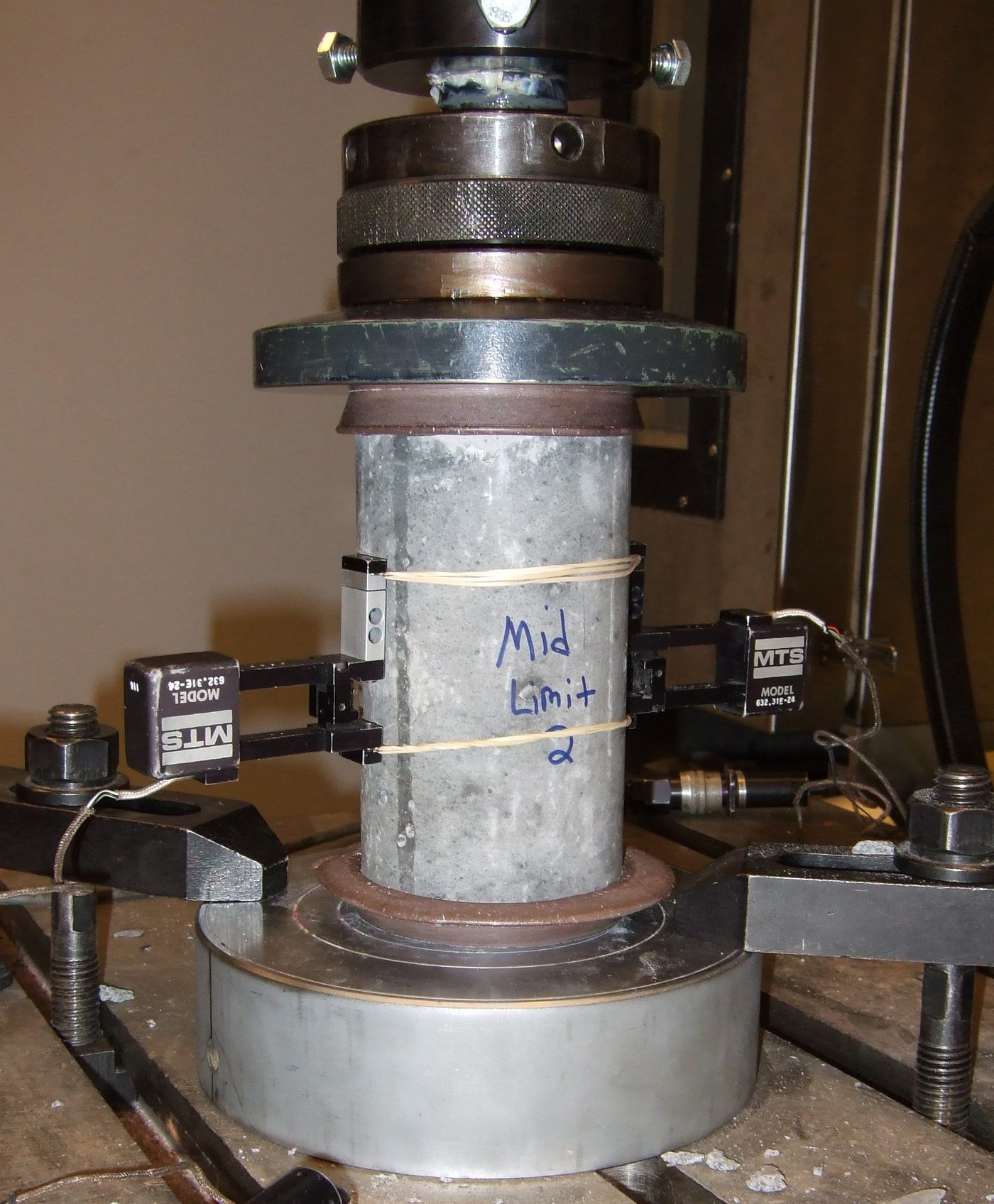
Photo 3. Measured evidence outranks observation: a tested cylinder or core beats a visual rating in any defensible argument.
Wikimedia Commons, public domain
3. Stakeholders: who is affected, who decides
Civil systems serve people who did not choose them. A rigorous problem definition names the affected population, the operating agency, the funding authority, the regulator and any community group with standing. For each, record their interest, the impact of the problem on them, and their influence over the decision.
Stakeholder analysis changes engineering choices. A drainage retrofit that closes a lane for six weeks may be technically superior and practically unacceptable to a hospital access route. Constraints discovered here become the constraints section of your proposal and the evaluation criteria of your alternatives comparison in CEGR 493.

Photo 4. Owner, agency and design team in the same field review — the map of who is affected and who signs.
Capstone Studio instructional photograph
4. Structured root-cause analysis
Two methods are sufficient for most capstone work. The five-whys chain asks 'why' repeatedly until the answer becomes a controllable mechanism rather than another symptom; it works well for single-path failures. The cause-and-effect (fishbone) diagram organizes candidate causes into categories — design, materials, construction, loading, environment, maintenance, operation — and works better when several factors interact.
Both methods produce hypotheses, not conclusions. Each hypothesis must be paired with a test: a measurement, a records check, a calculation, or a model comparison that could disprove it. A hypothesis that no available evidence could disprove belongs in the limitations section, not in the problem definition.
Problem severity = (Consequence) × (Likelihood) × (Exposure)
- Consequence — safety, service or cost impact
- Likelihood — probability of occurrence in the analysis period
- Exposure — population or asset affected
Avoid this trap. Stopping the five-whys at 'poor maintenance' names an organization, not a mechanism. Continue until you reach something an engineer can design against.
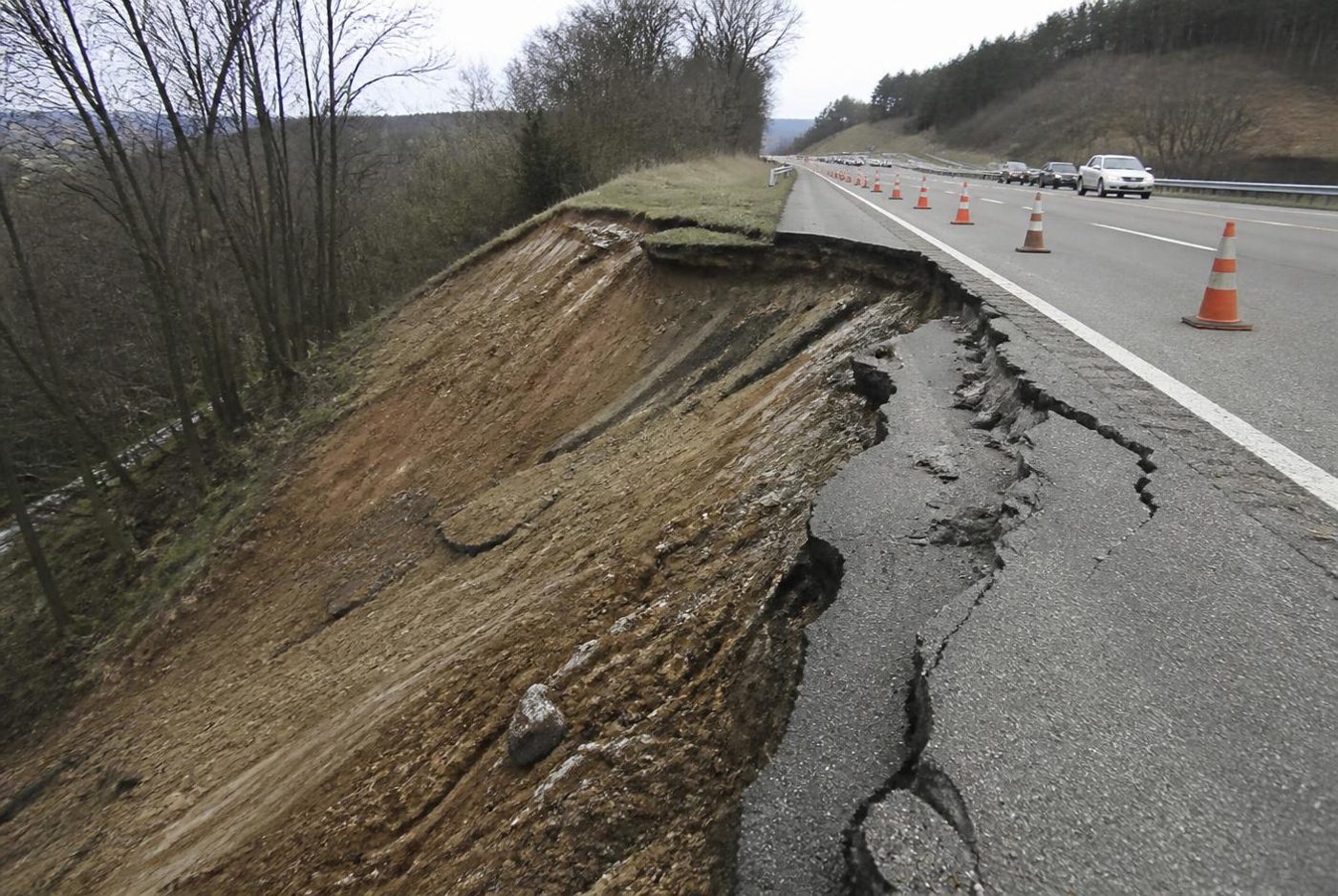
Photo 5. Five whys applied to a slope failure: scarp, saturation, loss of shear strength, drainage that was never built.
Capstone Studio instructional photograph
Table 1. Symptom, problem and root cause for four disciplines.
| Discipline | Symptom | Problem (against criterion) | Typical root cause |
|---|---|---|---|
| Structural | Deck spalling and rust staining | Deck condition rating 4; chloride content exceeds corrosion threshold | Joint leakage delivering chlorides to the deck and girder ends |
| Geotechnical | Cracked wall coping and tilt | Sliding factor of safety below 1.5 under AASHTO LRFD | Drain blockage producing full hydrostatic pressure behind the stem |
| Transportation | Queues on the eastbound approach | Level of service F, control delay above 80 s/veh | Signal timing based on counts predating a 900-unit development |
| Water | Street flooding twice per year | HGL above rim elevation in the 10-year storm | Downstream pipe undersized after upstream watershed development |
Professional workflow
- Document the symptom with date-stamped photographs and location references.
- Retrieve agency records: inspection reports, as-builts, maintenance logs, prior studies.
- Measure or obtain the condition data that expresses the symptom numerically.
- State the governing criterion and compute the exceedance.
- Generate candidate mechanisms with a fishbone or five-whys analysis.
- Pair each hypothesis with a disproving test; execute the feasible tests.
- Write the three-sentence problem definition with evidence tiers attached.
Applicable standards
AASHTO Manual for Bridge Element Inspection
Condition state definitions used to convert observed distress into ratings.
ASTM D6433 (pavement) / ASCE condition assessment guides
Repeatable distress survey procedures for pavements and facilities.
Highway Capacity Manual
Level of service criteria that convert congestion complaints into measured deficiency.
Local stormwater design manual
Design storm and hydraulic grade line criteria for drainage deficiency.
Case study — Recurring culvert washouts on a rural collector
A county replaced the same 36 in. culvert three times in nine years after storm washouts.
- Each replacement matched the original size because the original plan was used as the design basis.
- Upstream land use had converted 180 acres from agriculture to low-density residential, raising the runoff coefficient.
- The fourth analysis sized the crossing for current land use and provided a 54 in. structure with scour protection; no failure has recurred.
Lesson learned. A repeated failure is evidence that the problem was never defined — only the artifact was replaced.
Source: Composite of county highway department project records.
Why this section exists
A capstone must solve a problem that exists whether or not you show up. Problem identification separates a symptom from its root cause.
Learning objectives
- Document the existing condition with evidence
- Map stakeholders, their needs, and their influence
- Distinguish symptoms, causes, root causes, consequences, and constraints
- Write a defensible engineering need statement
Problem Identification
Weak
The bridge is old and deteriorated and needs to be fixed.
Strong
Chloride-induced corrosion has produced 18% average section loss in the exterior girder bottom flanges, reducing the inventory rating factor to 0.82 and triggering a posted load limit that reroutes 240 trucks per day.
It states mechanism, measurement, engineering consequence, and who is affected.
Standards and codes
Condition language should follow inspection and assessment frameworks: NBI condition ratings, ASCE infrastructure grading, HCM level of service, or ASTM test-based criteria.
Common mistakes
- Describing a condition as 'deteriorated' with no measurement.
- Confusing a symptom with a root cause.
- Listing a solution before the problem is defined.
Research tips
- Separate the symptom (cracking) from the mechanism (chloride-induced corrosion) from the cause (no deck sealing program).
- Quantify with a measurable unit: section loss in percent, settlement in mm, delay in seconds per vehicle.
- Name the stakeholders who bear the consequence.
A retaining-wall proposal described cracking and specified new facing. Two years later the wall moved again — the drainage system was still clogged.
- What went wrong?
- Cracking (a symptom) was treated as the problem; drainage-induced lateral pressure was never diagnosed.
- What information was missing?
- Drainage condition, groundwater level, backfill properties, and stability factors of safety.
- What should the team do next?
- Perform root-cause analysis distinguishing drainage failure from bearing-capacity failure before selecting a fix.
- Which section addresses it?
- Root Causes and Engineering Need
Walkthrough video
Mini quiz
Interactive checklist
0/4FE Civil connection — Ethics and Professional Practice
Correctly identifying the problem is a professional obligation; misdiagnosis transfers risk to the public.
Reference Handbook: FE Reference Handbook — Ethics and Professional Practice (section placeholder)
- An engineer discovers evidence contradicting the client's preferred conclusion. What is the required action? (placeholder)
- Which NSPE canon governs holding public safety paramount? (placeholder)
- When may an engineer accept work outside their area of competence? (placeholder)
Recommended resources
- ASCE condition assessment guidelines — Structured inspection documentation.