CEGR 492 · Proposal Development
Topic Selection Studio
Move from broad interest to a specific, feasible, technically meaningful capstone topic.
Topic Selection: choosing a defensible capstone problem
0 of 4 lecture sections read
Engineering story
Two teams start the same semester. Team A writes 'Design of a pedestrian bridge.' Team B writes 'Evaluation and redesign of the Maple Street pedestrian crossing, where 1,900 students cross a four-lane arterial with an 85th-percentile speed of 46 mph and no signalized crossing within 0.4 mi.' By week five Team A is still arguing about span length and has no site, no loads and no data. Team B already has crash records, traffic counts and an AASHTO-based design basis.
- What is the engineering problem?
- Team A named an artifact; Team B named an engineering problem with a measurable performance deficiency at a real location.
- What information is missing?
- Team A has no site, no owner, no data source, no governing standard and no acceptance criteria.
- What should the engineer evaluate?
- Whether a licensed engineer's standard of care would actually govern the intended deliverable, and whether the data needed to prove the deficiency is obtainable in twelve weeks.
- What decision must be made?
- Accept, narrow, or replace the topic before any writing begins.
- How does this lesson help?
- This lecture gives you the four tests a capstone topic must pass and the pattern for writing a title that already contains the problem, the site and the governing criterion.
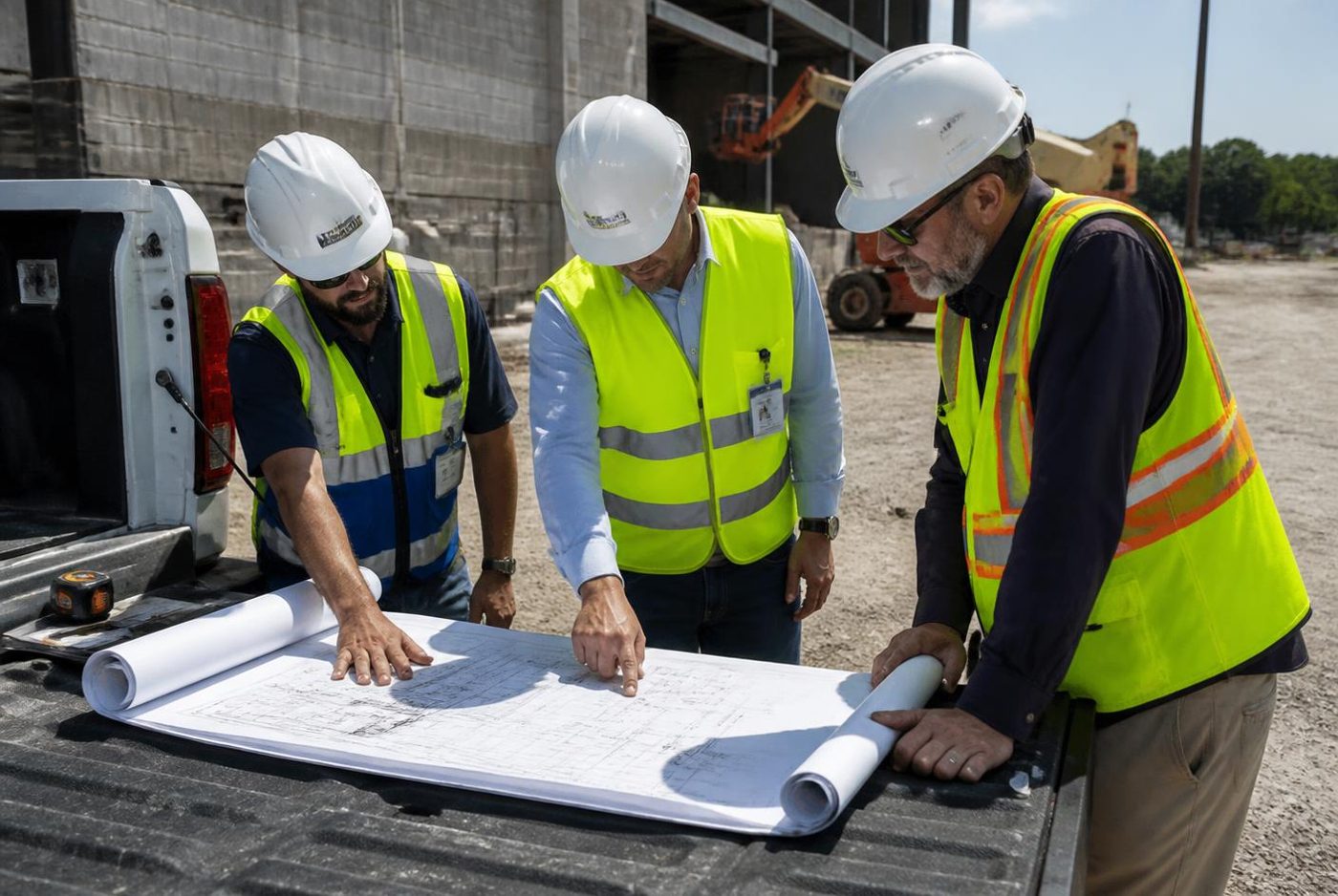
Photo 1. Two teams, one site visit: the topic becomes defensible only when the team stands at a real system and names a measurable deficiency.
Capstone Studio instructional photograph
Why this matters
- Public safety: a topic anchored to a real deficiency produces a design that could actually protect users; a generic topic produces an academic exercise.
- Professional practice: proposals in industry are scoped against an owner need, a budget and a schedule — capstone mirrors that discipline.
- Feasibility and cost: twelve weeks is a hard constraint. A topic requiring inaccessible proprietary data cannot be completed at any level of effort.
- Code compliance: a topic without a governing standard cannot be evaluated for acceptability, so no defensible conclusion is possible.
- Ethics: choosing a topic you cannot support with data invites fabricated results later in the semester.
Learning objectives
- Identify a civil engineering performance deficiency at a specific site or system.
- Classify the topic by discipline, project type and governing standard family.
- Evaluate topic feasibility against data availability, schedule and advisor expertise.
- Formulate a working title that names the problem, the site and the criterion.
- Justify the topic's significance to an identified owner or community.
ABET evidence: SO 1 — identify and formulate complex engineering problems · SO 2 — design within realistic constraints · SO 4 — recognize ethical and professional responsibilities · CE-PC1
Prerequisite review
Discipline fundamentals
Recall the primary limit states and performance measures of your discipline: strength and serviceability (structural), bearing and settlement (geotechnical), capacity and safety (transportation), conveyance and quality (water).
Standards awareness
Know which standard family governs your work: AASHTO LRFD, ACI 318, AISC 360, ASCE 7, MUTCD, HCM, TR-55, or the state DOT manual.
Open refresherData literacy
Public sources include NBI bridge inspections, state DOT traffic counts, USGS gauges, NOAA Atlas 14, NRCS soil surveys and municipal GIS portals.
1. What a capstone topic actually is
A capstone topic is a bounded engineering problem whose resolution requires analysis, design decisions and judgment under a recognized standard. It is not a structure type, a software package or a general subject area. The difference is testable: if the title can be satisfied by describing something rather than deciding something, it is not yet a topic.
Every acceptable topic contains three components. First, a system or site that exists or is credibly planned. Second, a measurable deficiency, demand or unknown — insufficient capacity, excessive settlement, failing level of service, non-compliant sight distance, undersized culvert, or an unquantified relationship. Third, a criterion that determines acceptability, drawn from a code, agency manual or accepted analytical benchmark.
The presence of a criterion is what allows a conclusion. Without it, an analysis produces numbers and no engineering statement. With it, you can write the sentence every capstone must eventually produce: 'The existing condition does not satisfy X; the proposed alternative satisfies X with a margin of Y.'
- System or site — named, located and documented.
- Deficiency or demand — measurable and evidenced.
- Criterion — a clause, chart or limit that decides acceptability.
Avoid this trap. A title containing only a structure type ('a retaining wall', 'a water treatment plant') is a subject, not a topic. Add the site and the criterion.
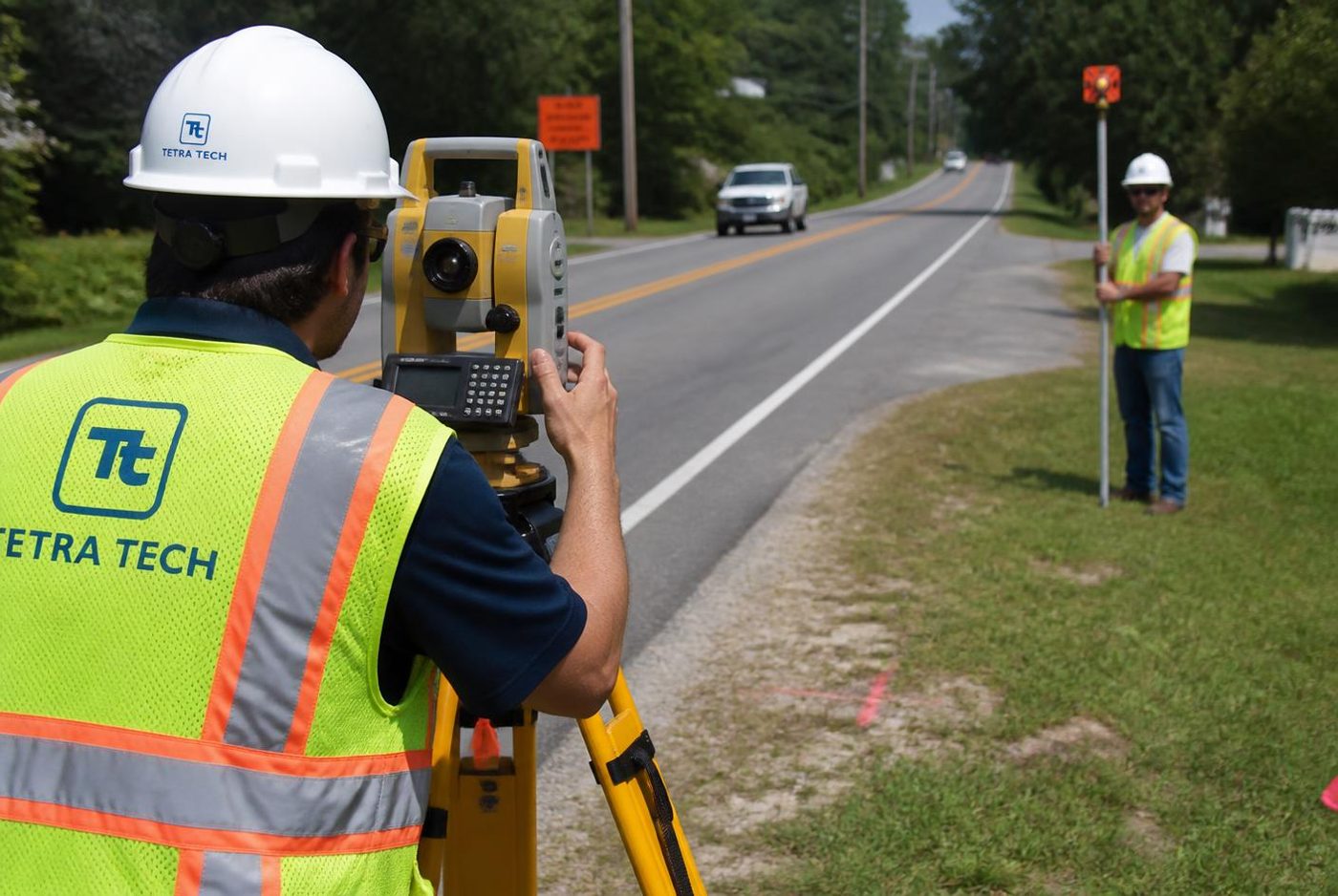
Photo 2. A system, a site and a criterion: the survey control that makes a location a real project rather than a subject area.
Capstone Studio instructional photograph
2. The four feasibility tests
Feasibility is not optimism; it is evidence that the work can be finished with defensible inputs. Apply four tests before committing. Data test: can you obtain, within two weeks, the numbers your analysis consumes? Standard test: can you name the specific clause or chart that governs? Method test: can you execute the analysis with software or hand methods you can learn this semester? Advisor test: does someone on faculty have the expertise to review your calculations?
Failing the data test is the most common cause of a stalled capstone. Substituting assumed values for missing measurements is acceptable only when the assumption is bounded, cited and carried through a sensitivity check. If every major input would be assumed, the project is a parametric study — reframe the topic accordingly rather than pretending to a site-specific design.
The method test protects the schedule. A finite element buckling study of a stiffened plate girder is legitimate work, but only if you already know the software or have eight weeks to learn it. Choose the analysis level that leaves time for verification, because unverified results cannot be defended.
Avoid this trap. Do not confuse interest with feasibility. A fascinating topic with no obtainable data yields a proposal you cannot execute in CEGR 493.
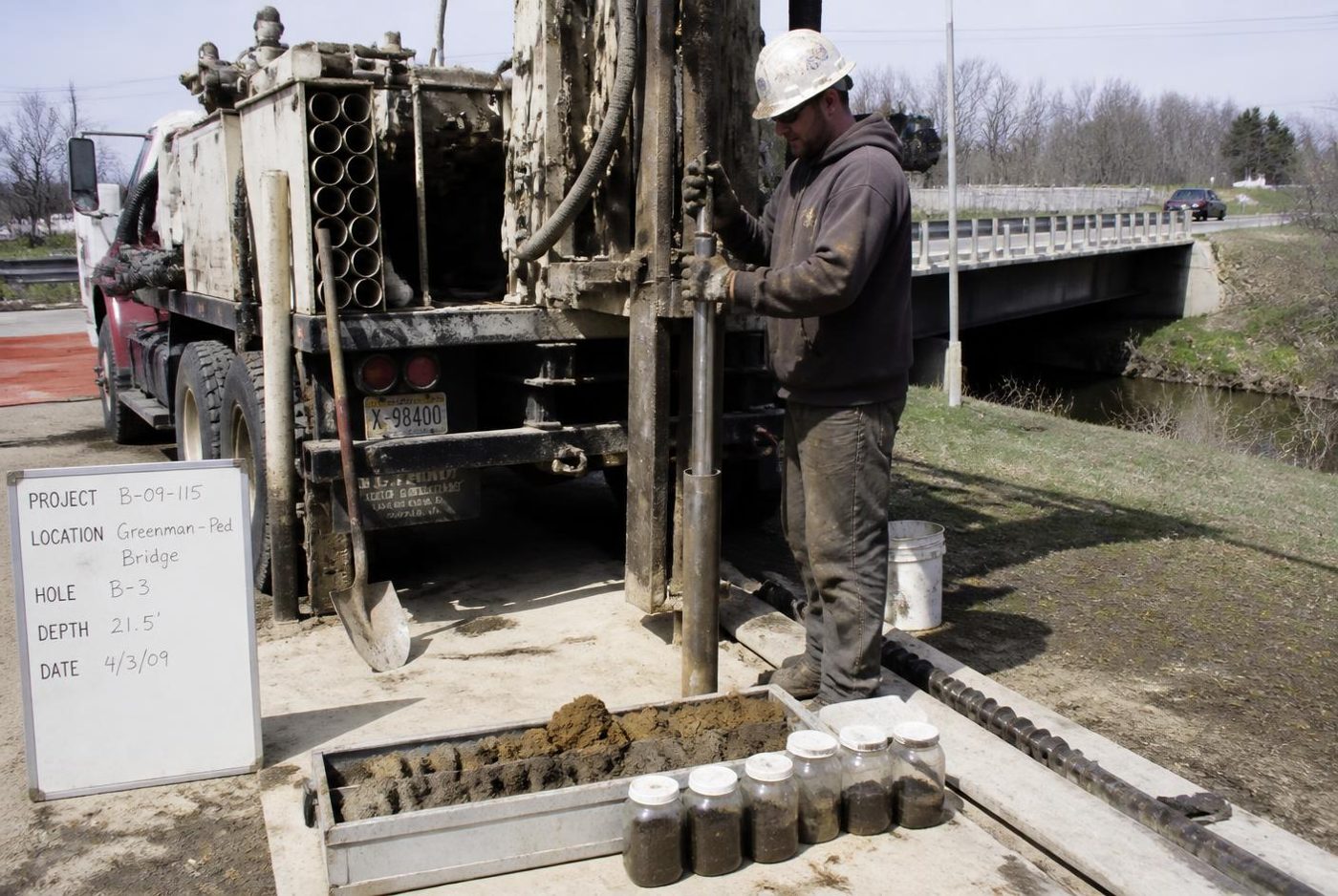
Photo 3. The data test in practice — if the borings and samples cannot be obtained, the analysis cannot be executed.
Capstone Studio instructional photograph
3. Writing the working title
A working title follows a repeatable pattern: [Action] of [System] at [Site or Context] to [Performance Objective] under [Standard]. The action names what you will do — evaluation, redesign, comparative analysis, calibration, forensic assessment. The performance objective names the measurable outcome — restore level of service C, satisfy the 25-year storm without surcharge, reduce differential settlement below 1 in.
Titles built this way survive contact with reality. When your advisor asks what governs, the answer is already in the title. When you write the problem statement three sections from now, the title supplies the deficiency and the criterion. When you assemble Chapter 1, the objectives are the title decomposed into steps.
- Weak: 'Bridge design project.'
- Better: 'Design of a pedestrian bridge on Maple Street.'
- Strong: 'Evaluation and LRFD redesign of the Maple Street pedestrian crossing to provide an ADA-compliant grade-separated route meeting AASHTO LRFD Guide Specifications for Pedestrian Bridges.'
4. Scoping to twelve weeks
Capstone scope should target one primary deliverable supported by two or three secondary analyses. A primary deliverable is the artifact a reviewer would evaluate: a design calculation package with drawings, a calibrated model with validation, a comparative alternatives study with a recommendation, or a forensic assessment with root causes.
Secondary analyses exist to make the primary deliverable defensible — a settlement check beneath a designed footing, a cost comparison of two alternatives, a sensitivity study of the runoff coefficient. Work that does not support the primary deliverable is scope creep and should be listed as future work in Chapter 5 instead of being attempted now.
Photo 5. Scope is negotiated with the advisor and the owner, then frozen; one primary deliverable with supporting analyses.
Capstone Studio instructional photograph
Table 1. Topic quality rubric applied at advisor review.
| Attribute | Not acceptable | Acceptable | Strong |
|---|---|---|---|
| Site | Generic or hypothetical | Named location | Named location with documented condition data |
| Deficiency | Implied | Stated qualitatively | Quantified against a criterion |
| Standard | None | Family named | Specific clause or chart identified |
| Data | Unknown source | Source identified | Data already obtained and screened |
| Deliverable | Undefined | Named artifact | Named artifact with acceptance criteria |
Professional workflow
- Select a discipline and list three candidate systems you can physically visit or fully document.
- For each candidate, identify one measurable deficiency and the criterion that defines it.
- Search for data: inspection reports, counts, gauge records, borings, GIS layers, agency plans.
- Score each candidate against the four feasibility tests.
- Draft a working title using the [Action] of [System] at [Site] to [Objective] under [Standard] pattern.
- Confirm advisor expertise and obtain preliminary approval before writing the background.
Applicable standards
AASHTO LRFD Bridge Design Specifications
Governing criteria for bridge and pedestrian structure topics.
ASCE 7 / ACI 318 / AISC 360
Load definition and member design criteria for building structure topics.
Highway Capacity Manual and MUTCD
Operational and traffic-control criteria for transportation topics.
NRCS TR-55 and local stormwater manual
Runoff and detention criteria for water resources topics.
Case study — A capstone that changed topic in week seven
A team proposed a seismic retrofit of a campus building without confirming that structural drawings were releasable.
- Drawings were held by facilities and required a records request that took six weeks.
- Member sizes had to be assumed, so the retrofit design could not be tied to the existing structure.
- The team pivoted to a nonstructural component anchorage study using ASCE 7 Chapter 13, which required only field-measurable inputs.
Lesson learned. Confirm data access in writing during week one; the availability of inputs, not the appeal of the subject, determines what can be engineered.
Source: Composite of departmental capstone advising records.
Why this section exists
The topic fixes the scope of everything downstream. A topic that names a structure type instead of an engineering problem produces twelve weeks of drifting work.
Learning objectives
- Explore civil engineering disciplines and their typical project types
- Compare candidate project ideas against real resource limits
- Score feasibility with a weighted matrix
- Commit to one defensible working title
Topic Selection
Weak
Design a bridge.
Strong
Evaluate and design a rehabilitation strategy for the 120 ft steel pedestrian bridge at Elm Street using AASHTO LRFD, including deck replacement and fatigue assessment of the floor beams.
It names the system, the site, the action, the governing standard, and the deliverable.
Standards and codes
A capstone topic must name a governing standard early — AASHTO LRFD, ACI 318, ASCE 7, AISC 360, NRCS TR-55, or an agency design manual.
Common mistakes
- Naming a structure type ('a bridge') instead of an engineering problem.
- Choosing a topic with no accessible data.
- Scoping a multi-year research program into one semester.
Research tips
- Search the owner agency's asset inventory or inspection reports for a real site.
- Check that public data exists before committing: traffic counts, borings, gauge records, or inspection ratings.
- Confirm a licensed engineer's standard would actually govern your deliverable.
A team proposed 'designing a bridge.' By week 6 they had not defined the span, the owner, the loading, or the governing standard, and each member was designing a different structure.
- What went wrong?
- The topic named a structure type, not an engineering problem with a site, owner, and criteria.
- What information was missing?
- Span and geometry, design vehicle or pedestrian loading, owner requirements, governing standard, and site constraints.
- What should the team do next?
- Return to topic selection and define site, owner, loading, standard, and deliverables before any analysis.
- Which section addresses it?
- Final Topic Selection and Feasibility Assessment
Walkthrough video
Mini quiz
Interactive checklist
0/4FE Civil connection — Engineering Economics
Topic feasibility is an economic decision: time, cost, and resource trade-offs against expected benefit.
Reference Handbook: FE Reference Handbook — Engineering Economics (section placeholder)
- Compute the present worth of two rehabilitation alternatives over a 20-year horizon. (placeholder)
- Determine the benefit-cost ratio for a safety countermeasure. (placeholder)
- Select the alternative with the lowest equivalent uniform annual cost. (placeholder)
Recommended resources
- ASCE Civil Engineering Body of Knowledge — Framing technical depth expectations.
- Advisor office hours — Confirm expertise alignment before committing.