
CEGR 492 · Proposal Development
Research Gap Builder
Identify what is missing from existing knowledge, practice, data, or validated solutions.
Research and Design Gap: proving the work is needed
0 of 3 lecture sections read
Engineering story
A team proposes to calibrate a rainfall-runoff model for an urban watershed. A reviewer asks: 'Three published studies calibrated models for similar watersheds. What do we not know?' The team has no answer, because they never separated what has been done from what remains unresolved at their site and scale.
- What is the engineering problem?
- Without an articulated gap, the project duplicates known work and produces no new engineering value.
- What information is missing?
- What existing studies covered, at what scale, with what data, and what conditions they could not address.
- What should the engineer evaluate?
- Whether the gap is real, specific and closable within the semester.
- What decision must be made?
- Whether to proceed, narrow the gap, or reframe the contribution as a site-specific design application.
- How does this lesson help?
- This lecture distinguishes the five gap types and shows how to evidence a gap without overclaiming novelty.
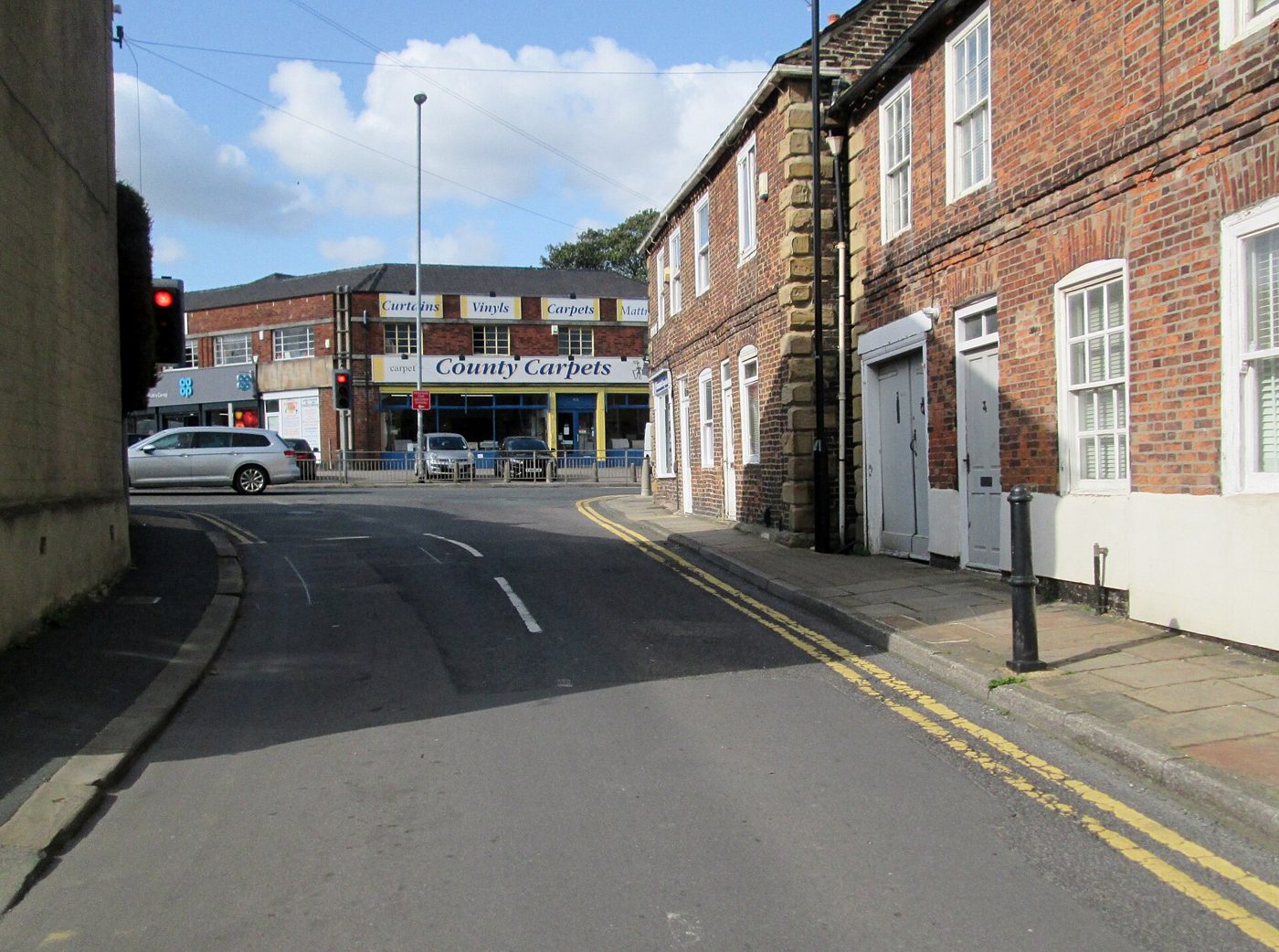
Photo 1. The intersection studies that already exist stop at counts; the gap is the missing evaluation of the criterion at this location.
geograph.org.uk via Wikimedia Commons, CC BY-SA 2.0
Why this matters
- Academic integrity: claiming novelty that does not exist is a misrepresentation.
- Professional value: a well-stated gap explains what the client gets that they could not get from existing work.
- Efficiency: a specific gap prevents rework of settled questions.
- Assessment: gap articulation is direct evidence for ABET outcomes on problem formulation and literature use.
Learning objectives
- Classify gaps as knowledge, methodological, application, population/site, or contradiction gaps.
- Evidence a gap from the literature and agency practice rather than from absence of searching.
- Evaluate whether a gap is closable with available data and time.
- Formulate a gap statement that connects directly to the objectives.
ABET evidence: SO 1 · SO 4 · SO 7 — acquire and apply new knowledge · CE-PC8
Prerequisite review
Literature search
You must have searched systematically before claiming a gap; an unsearched topic is not a gap.
Open refresherProblem statement
The gap explains why the problem cannot be resolved with existing knowledge or practice alone.
Open refresher1. Five gap types
Knowledge gap: a relationship or behavior has not been quantified. Methodological gap: existing approaches cannot measure or model the situation adequately. Application gap: methods exist but have not been applied to this class of asset, region, or constraint. Population or site gap: the setting differs materially — climate, soil, traffic mix, regulatory regime — from where the methods were validated. Contradiction gap: credible sources disagree and the disagreement matters for design.
Undergraduate capstones most often and most legitimately claim application and site gaps. That is not a lesser contribution: applying validated methods to an unstudied asset with local data produces exactly the engineering deliverable an owner needs.
Avoid this trap. Do not claim a knowledge gap because you did not find literature. Absence of evidence in your search is evidence about your search.

Photo 2. A measurement gap: counts exist for the AM peak only, so the PM condition that drives the complaint is unquantified.
Wikimedia Commons, CC BY 2.0
2. Evidencing the gap
A gap statement must be supported the same way a finding is. Cite the studies that define the current boundary, state precisely what each covered, and identify the untouched condition. The strongest form is a table: source, scope, method, setting, limitation. The limitation column is where your gap lives.
Agency practice is also evidence. If a state DOT manual provides no guidance for a condition your project faces, that absence — documented by citing the manual section that stops short — is a legitimate practice gap.
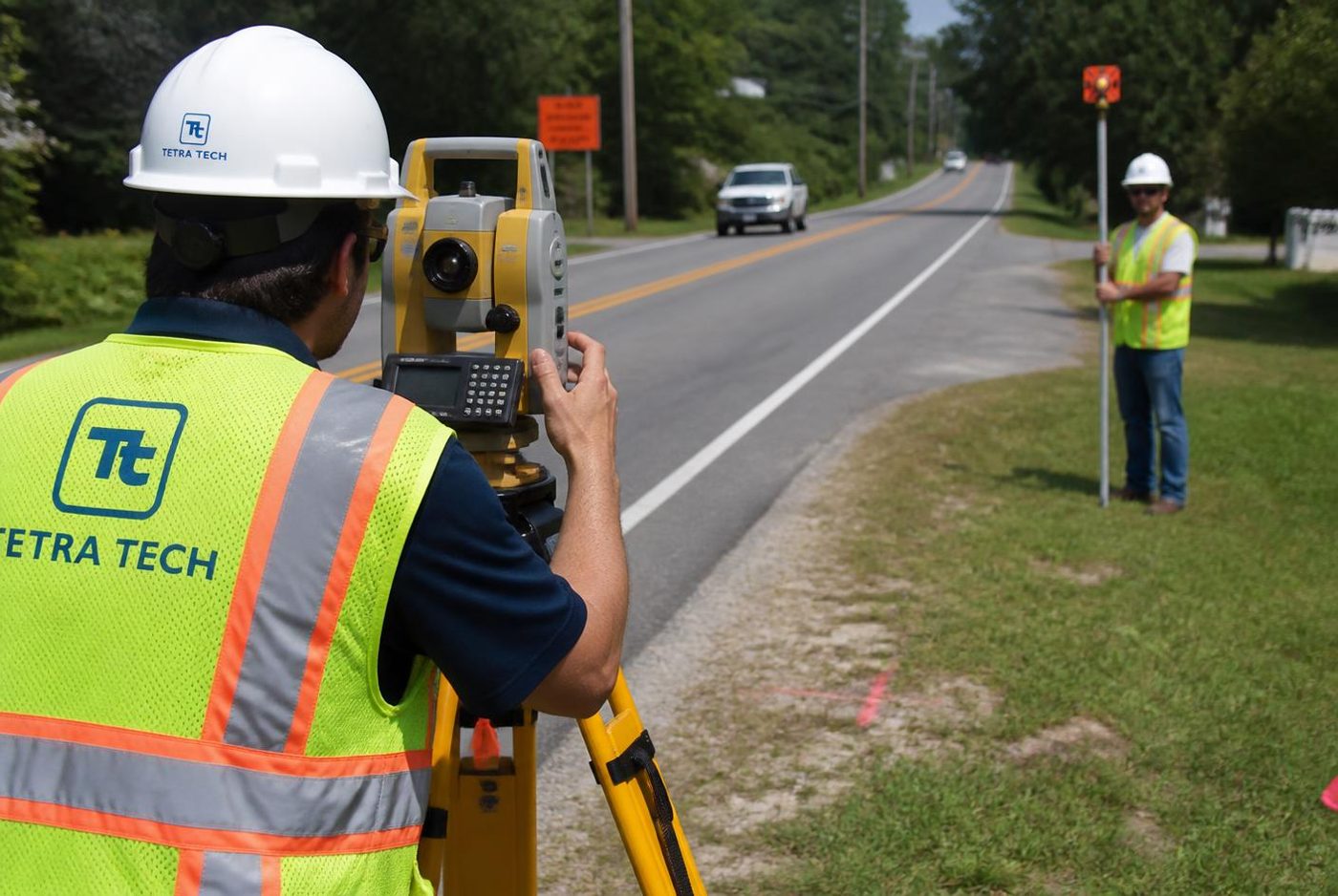
Photo 3. Evidencing a gap often means collecting the missing measurement yourself.
Capstone Studio instructional photograph
3. Closability
A gap you cannot close is a topic for future work. Test closability before committing: what data would close it, do you have it, and what analysis converts that data into an answer? If the honest answer requires instrumentation you cannot install or records you cannot obtain, narrow the gap until the answer becomes yes.
Table 1. Gap types with capstone-appropriate examples.
| Gap type | Example | Typical evidence |
|---|---|---|
| Knowledge | Bond behavior of a specific FRP-concrete interface at low temperature | Absence in systematic review of test data |
| Methodological | No accepted method to estimate scour at a skewed multi-column pier with debris | Method papers stating limitation |
| Application | TR-55 applied to a karst-influenced urban watershed with local gauge calibration | Manual applicability statement plus site conditions |
| Site | HCM signal delay models applied to a campus corridor with 40 percent pedestrian interference | Model validation setting versus site data |
| Contradiction | Conflicting recommendations on permeable pavement infiltration credit in cold climates | Two credible sources with opposing guidance |
Professional workflow
- Complete a systematic search and record the strategy so the gap can be audited.
- Build the evidence matrix and populate the limitation column from the sources themselves.
- Classify the gap type and write one sentence naming what remains unresolved.
- Test closability against your available data and schedule.
- Link the gap to at least one objective that closes it.
Applicable standards
Agency design manuals
Practice gaps are evidenced where guidance stops short of your condition.
PRISMA-style search documentation
Makes the search auditable so gap claims can be verified.
Case study — An overclaimed gap withdrawn at defense
A team claimed the first study of a bridge retrofit type; a committee member cited two prior applications.
- The contribution was reframed as a site-specific application with local material data.
- The reframed claim was accepted and the technical work was unchanged.
Lesson learned. Precise, modest claims survive scrutiny; broad claims collapse on a single counterexample.
Source: Departmental defense records.
Why this section exists
The gap is what makes your work a contribution rather than a repetition.
Learning objectives
- Classify the gap type
- Build a literature-to-gap matrix
- Write a formula-based gap statement
Research / Design Gap
Weak
No one has studied this bridge before.
Strong
Fatigue evaluations of riveted floor-beam connections (Fisher, 2018; Zhao, 2021) assume full composite action; none address the partially corroded, non-composite condition documented on this structure, so no published procedure supports its remaining-life estimate.
It cites the nearest work and names the exact boundary it does not cross.
Standards and codes
Gaps are argued from literature and practice documents, not from the absence of a Google result.
Common mistakes
- Claiming nobody has studied it.
- A gap too large for a capstone.
- A gap with no link to your objectives.
Research tips
- Classify the gap: knowledge, methodological, population/site, application, or practice.
- Cite the closest existing work and state precisely where it stops.
- A gap must be closable in one semester.
A team justified its project by claiming few studies existed, then found six directly relevant papers during Chapter 2.
- What went wrong?
- The gap was asserted rather than demonstrated from evidence.
- What information was missing?
- A literature matrix showing what each source resolved and what it left unresolved.
- What should the team do next?
- Complete the literature-to-gap matrix and restate the gap in terms of a specific unresolved condition.
- Which section addresses it?
- Literature-to-Gap Matrix
Walkthrough video
Mini quiz
Interactive checklist
0/4FE Civil connection — Probability and Statistics
Distinguishing a real performance gap from statistical noise requires basic inference.
Reference Handbook: FE Reference Handbook — Probability and Statistics (section placeholder)
- Compare two sample means with unequal variances. (placeholder)
- Interpret an R-squared value for a regression of settlement vs. load. (placeholder)
- Determine whether a difference in crash rates is statistically meaningful. (placeholder)
Recommended resources
- ASCE Library — Peer-reviewed civil engineering literature.