CEGR 492 · Fall 2026
Course Orientation — Capstone I — Proposal Development
Turn a real civil engineering need into a defensible, standards-based project proposal.
August 26–November 29, 2026
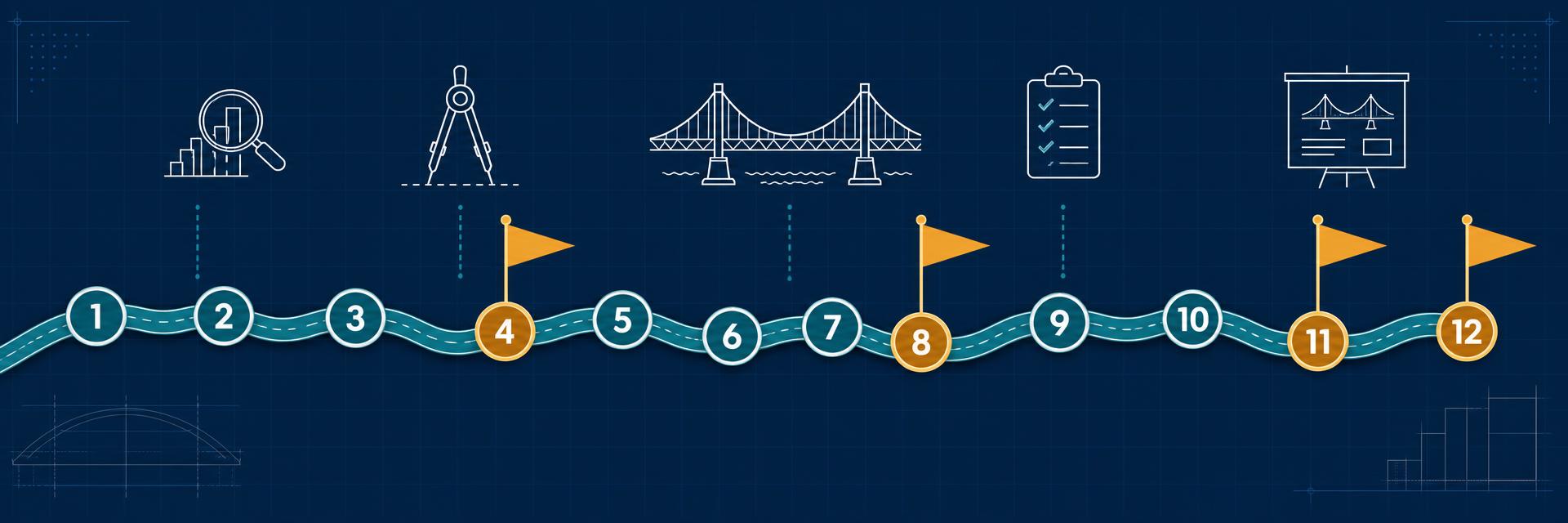
12-Week visual roadmap
Currently in Week 5
Week 1
Aug 26 – Aug 30
Orientation, project discovery, and team formation
Week 2
Sep 2 – Sep 6
Problem identification and needs analysis
Week 3
Sep 9 – Sep 13
Literature review and standards register
Week 4
Sep 16 – Sep 20
Objectives, scope, and Chapter 1 assembly
Week 5
Sep 23 – Sep 27
Chapter 2 — literature review drafting
Week 6
Sep 30 – Oct 4
Midterm review and design criteria
Week 7
Oct 7 – Oct 11
Methodology framework
Week 8
Oct 14 – Oct 18
Discipline design methods
Week 9
Oct 21 – Oct 25
Project management, budget, and schedule
Week 10
Oct 28 – Nov 1
Chapter 3 assembly and quality control
Week 11
Nov 4 – Nov 8
Full proposal integration
Week 12
Nov 11 – Nov 15
Preliminary results and discipline analysis
Week 13
Nov 18 – Nov 22
Proposal defense and final submission
Why this course exists
CEGR 492 teaches you to identify a genuine civil engineering problem, justify it with evidence and literature, and design a complete methodology for solving it. You leave the course with an advisor-approved proposal that becomes the scope of work for Capstone II.
- Frame a complex, open-ended civil engineering problem and defend why it matters.
- Synthesize technical literature, codes, and standards into a research gap.
- Design a methodology that is traceable from every objective to a specific method and data source.
- Communicate the work in a formal proposal document and an oral defense.
What success looks like
- • Every objective is measurable and matched to a method.
- • Every claim is cited; every number has a source.
- • Codes and standards are named with edition and clause.
- • The advisor and administrator scores both meet the rubric target.